A seven-step plan for launching a clothing brand online in Pakistan: niche, sourcing, pricing that survives refused parcels, photos, a free store with cash on delivery and your first orders.
To start a clothing brand online in Pakistan, pick one narrow niche, make a small first batch you can afford to lose, photograph it well, and open a store that takes cash on delivery from day one. You can do all of that without a developer: a free Yuplify store takes real orders, and you only pay for the stock, the photos and the courier.
This guide walks through the steps in order, from choosing what to sell to shipping your first parcels. The rupee figures are assumptions to show the method, not quotes from any supplier or courier, so redo the sums with your own prices. Yuplify publishes this page, so read the platform advice with that in mind; the rest of it applies on any store builder. For the wider picture of starting any online business, see how to start an online business in Pakistan and the step-by-step guide to making an ecommerce website in Pakistan.
The Steps at a Glance
| Step | What you decide | Rough time |
|---|---|---|
| 1. Niche | Who you sell to and what single type of clothing you start with | 1 week |
| 2. Sourcing | Make it, buy it wholesale or have it stitched by a tailor | 1 to 3 weeks |
| 3. Pricing | Cost, margin and what a refused parcel does to your profit | 1 day |
| 4. Brand | Name, logo, colours and a clean look for your photos | 1 week |
| 5. Photos | Clear pictures of every item, on a model or flat | 2 to 3 days |
| 6. Store | Products, sizes, delivery rules and cash on delivery | 1 to 2 days |
| 7. First orders | Friends, Instagram, WhatsApp and a small test budget | Ongoing |
Most people spend too long on steps 1 to 4 and too little on step 7. A brand does not exist until someone you do not know has paid for it, so try to compress the early steps and get to a live store quickly.
Step 1: Pick One Niche, Not "Clothes"
"Clothing" is too wide to stand out. A new brand with five product types and no clear customer looks like a market stall. Pick one customer and one product to start, then widen once it sells.
Some ways to narrow down:
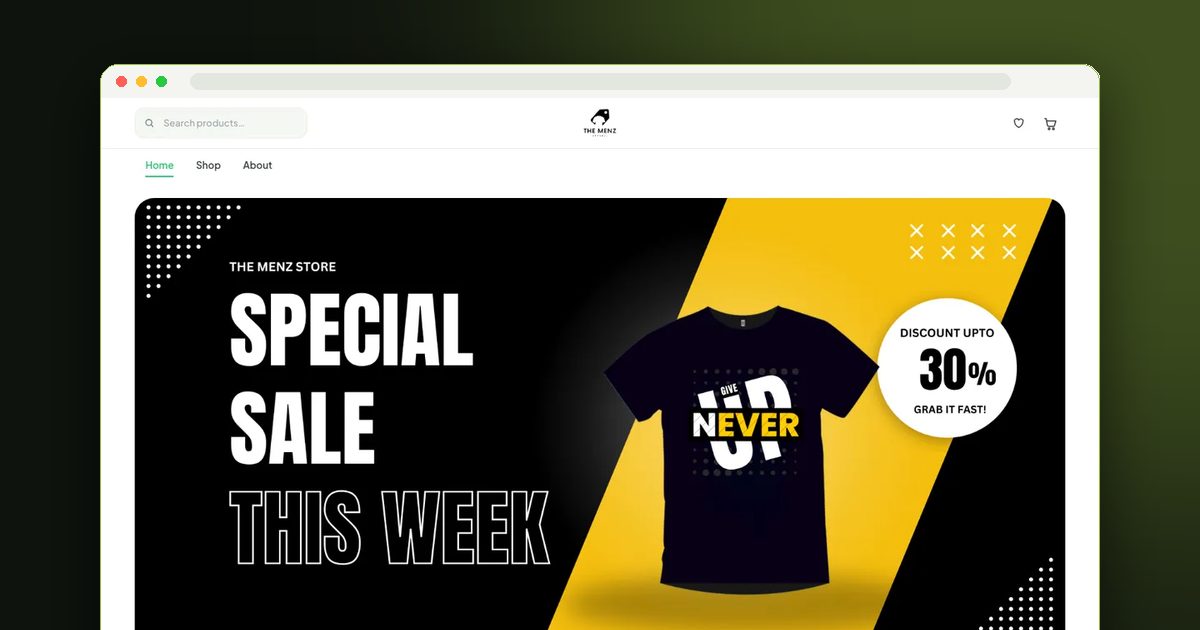
A good test is whether you can describe your customer in one sentence, for example "women in their twenties who want affordable printed kurtis for work". If you cannot, narrow it further. Real Pakistani clothing stores already run on Yuplify with exactly this kind of focus, for example The Menz Store for men's fashion, Pakistan Kurti House for ladies' dresses and ROAR for ladies' fashion. Look at how each one frames what it sells before you decide your own angle.
Step 2: Decide How You Will Source Your Stock
There are three common routes, and each ties up a different amount of cash.
| Route | How it works | Cash needed upfront | Main risk |
|---|---|---|---|
| Make or stitch it yourself | You buy fabric and use a tailor or your own workshop | Medium to high | Unsold stock and sizing mistakes |
| Buy wholesale | You buy ready-made pieces from a wholesaler and add your own branding | Medium | Many other sellers offer the same items |
| Order on demand | You list items and only buy or stitch after an order arrives | Low | Slow delivery and quality you cannot check |
If you have little cash, start with a very small batch or on-demand orders, and keep your first line to a handful of designs. Our guide to dropshipping vs holding inventory explains the trade-off in more detail.
Whichever route you choose, order samples first and check them yourself. Look at the stitching, the fabric after a wash, the colour against your photos and the sizing against a tape measure. Returns of badly made clothes cost far more than the time you spend checking.
Step 3: Price Your Clothes So You Still Profit After Refusals
Your price must cover the product, packaging, delivery, the marketing it took to get the order, and the parcels that come back. Here is a simple example using assumed numbers. They are not real market prices.
| Assumption (per item) | Amount |
|---|---|
| Cost of fabric and stitching | PKR 1,400 |
| Packaging | PKR 60 |
| Delivery you pay, each way | PKR 250 |
| Selling price | PKR 3,000 |
| Orders shipped in a month | 100 |
Each delivered order earns PKR 3,000 less PKR 1,400, PKR 60 and PKR 250, which is PKR 1,290 before marketing. Now see what refusals do:
| Parcels refused | Delivered | Earned on delivered | Packaging and outbound delivery on all 100 | Return trips | Profit before marketing |
|---|---|---|---|---|---|
| 5 | 95 | PKR 152,000 | PKR 31,000 | PKR 1,250 | PKR 119,750 |
| 20 | 80 | PKR 128,000 | PKR 31,000 | PKR 5,000 | PKR 92,000 |
Earned on delivered here means selling price less the fabric and stitching cost, per delivered order (PKR 1,600 each). Refused items go back into stock in this example, so only their packaging and delivery are lost. In real life some returned clothes cannot be resold, so be more careful than this table. The point is that the refusal rate moves your profit as much as your price does. Our guide on how cash on delivery works and how to cut fake orders has a checklist for keeping that number low.
Leave room in the price for sales and discounts. Raising a price later is harder than dropping it.
Step 4: Build a Simple Brand
You do not need a big brand identity to start, but you do need to look consistent.
Your brand also lives in your product copy. Our guide to writing product descriptions that sell covers what to say about fabric, fit and care.
Step 5: Photograph Every Piece Well
Photos decide whether a clothing store sells, because buyers cannot touch the fabric. You do not need a studio.
1. Shoot in daylight near a window, against a plain wall.
2. Take at least four pictures per item: front, back, a close-up of the fabric or embroidery, and one worn by a model or on a hanger with the full length visible.
3. Keep the lighting and background the same across all products so the store looks like one brand.
4. Show the real colour. A photo that looks nicer than the item causes refused parcels.
5. State the model's height and the size she or he is wearing in each caption.
Add short video clips if you can. Many Pakistani clothing buyers decide from Instagram reels and stories before they ever open a website.
Step 6: Open Your Store With Cash on Delivery
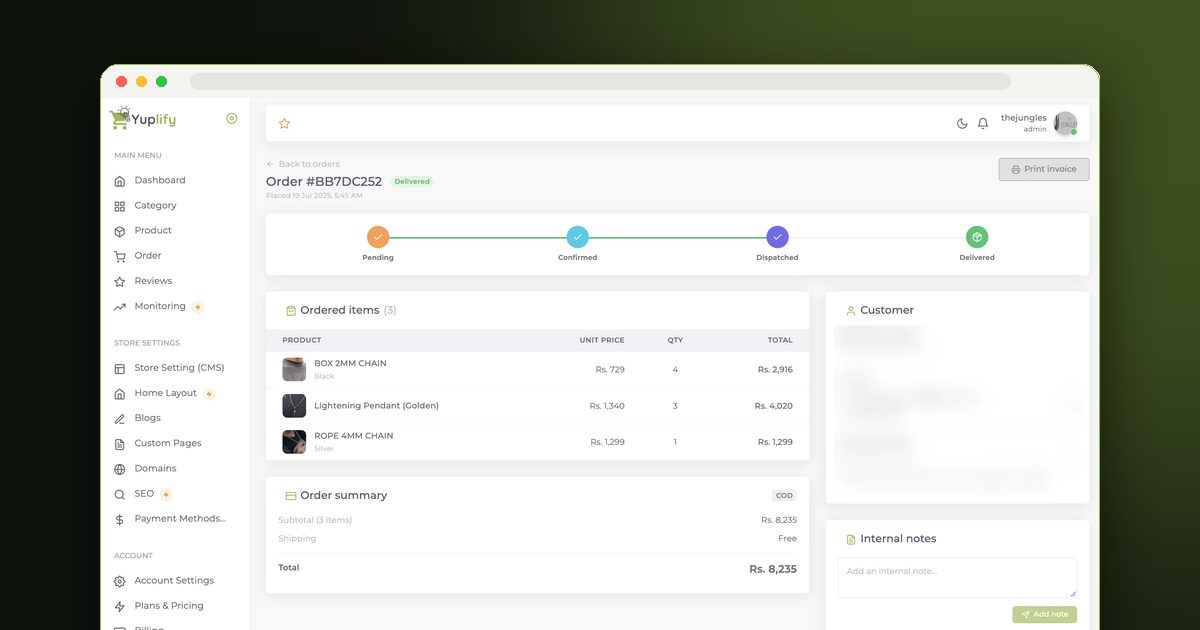
You can start selling on Instagram or WhatsApp alone, but your own store gives you a catalogue that stays organised, a checkout, order tracking and an address you own. On Yuplify the free Starter plan allows up to 30 products and 5 categories, two themes, a free yuplify.com address and unlimited orders, which is enough for a first collection. Pro is PKR 2,500 (US$8) a month and adds a custom domain, all 7 themes, unlimited products and courier booking, so you can upgrade when you outgrow the free plan. See the pricing page for the full list.
A sensible first setup for a clothing store:
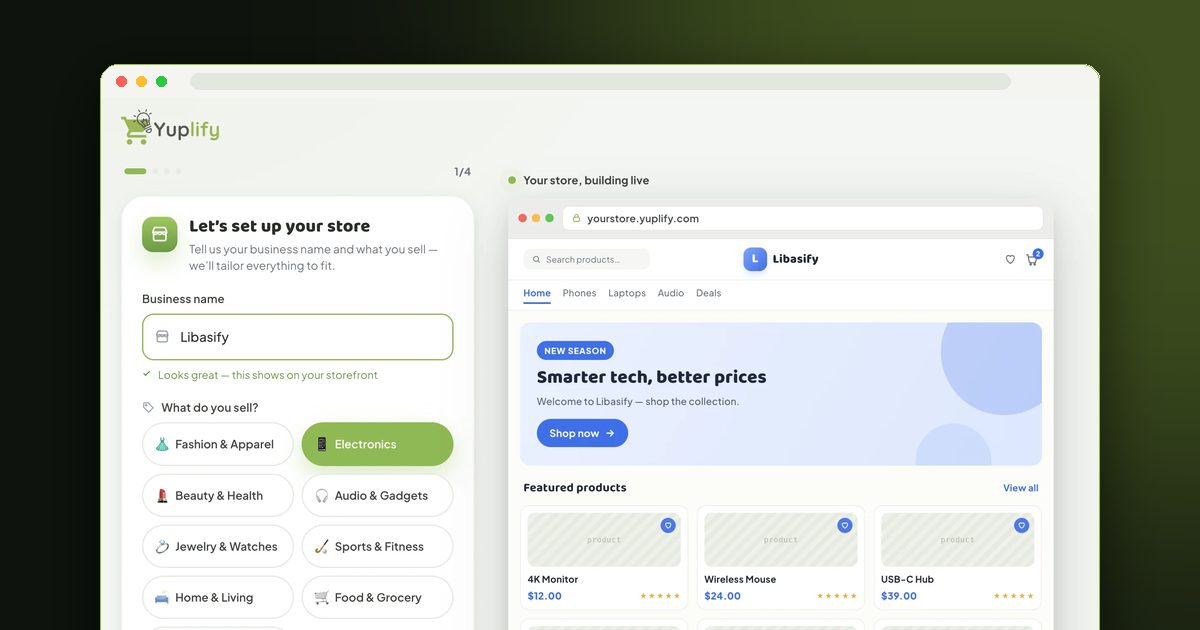
1. Create your store with the free ecommerce website builder and pick a theme.
2. Make categories for your niche, for example Lawn, Kurtis and Unstitched, and add each product with its photos.
3. Add sizes as variants, with a short description of the fit and fabric.
4. Keep cash on delivery on. It is built into checkout on every plan, and Yuplify takes no transaction fee on your sales.
5. Write your delivery time, return rule and WhatsApp number in a custom page.
On Pro you can also book TCS or Leopards from the order page. Stripe card payments are available on Pro as well. Easypaisa is marked as rolling out, and JazzCash is not supported, so do not promise either at checkout. To compare couriers before you choose, read TCS vs Leopards for online stores.
If you want to see the real cost of the whole setup, including the domain and courier, read the PKR cost breakdown.
Step 7: Get Your First Orders
Do not wait for strangers to find your store. The first ten orders usually come from people you can reach directly.
When orders arrive, confirm each one by phone or WhatsApp before you ship. Confirm the size, the address and that someone will be home. It is the cheapest way to cut refused parcels. If you plan to scale, read how to get your first 100 sales online.
Mistakes New Clothing Brands Make
Who Should Not Start With a Website First
A store is not the right first step for everyone.
Frequently Asked Questions
How much money do I need to start a clothing brand online in Pakistan? It depends on how much stock you make and how you source it. The store itself can be free on Yuplify's Starter plan, so most of your cash goes into stock, photos and the first deliveries. Start with a batch small enough to lose.
Can I start without a website? Yes. Many brands begin on Instagram and WhatsApp. A store makes orders easier to track and gives you a link you own, and the free plan costs nothing to try.
Do I need to pay a transaction fee on Yuplify? No. Yuplify takes no transaction fee on sales on any plan. Couriers and card gateways charge their own fees.
Which payment methods should I offer? Cash on delivery first, since it is built into every Yuplify plan and is how many Pakistani buyers prefer to pay. Add Stripe cards on Pro when you have steady orders.
Kapre ka brand online shuru karne ke liye kitna paisa chahiye? Yeh is par depend karta hai ke aap kitna stock banate hain. Yuplify ka Starter plan free hai, is liye zyada paisa stock, photos aur pehli deliveries par lagta hai. Chhote batch se shuru karein.
Kya main bina website ke kapre bech sakta hoon? Ji haan, Instagram aur WhatsApp par bhi bech sakte hain. Lekin apna store orders ko organise karta hai aur free plan par try karne ka koi kharcha nahi.
Kapre ki photos kaise lein? Din ki roshni mein, saade background par, har item ki kam az kam chaar photos lein: samne, peeche, fabric ka close-up, aur pehne hue. Asli rang dikhayein taake parcel refuse na ho.
Final Thoughts
A clothing brand starts small: one niche, a few designs you have checked yourself, clear photos, a price that survives refused parcels, and a store that takes cash on delivery. You can open that store for free, test it with real orders and upgrade when the orders justify it. When you are ready, start with the free ecommerce website builder and use the checklist above for your first collection.

Abu Bakar Memon
Founder & CEO
Abu Bakar Memon founded Yuplify in Karachi in 2023 — the free eCommerce website builder for small businesses in Pakistan. He writes about starting and growing an online store — pricing, cash on delivery, couriers and getting the first orders — from building the platform Pakistani sellers use every day.
Ready to Start Your E-Commerce Journey?
Create your online store in minutes with Yuplify. No coding required.
Get Started Free