AI can draft product copy and rough out a layout. It cannot pick your niche, price your catalog or ship an order. Here's what an AI e-commerce website builder actually does — and where the free tiers stop.
Two years ago, building an online store meant picking a template and then spending a weekend filling in every blank yourself — layout, copy, categories, settings. In 2026, a growing number of e-commerce website builders will do the first draft for you. You describe the business, and the tool generates a storefront, writes the product descriptions, and sets up a starter catalog. This article breaks down what an AI e-commerce website builder actually does today, what it does well, where you still need a human — and whether any of it is genuinely free.
What an AI E-Commerce Website Builder Actually Does
The phrase covers a wide range of tools. Some bolt a text generator onto an existing builder. Others use AI across the whole setup flow. In practice, the useful capabilities fall into five buckets: generating your storefront, writing your copy, building your catalog, merchandising, and supporting customers. None of these are magic — they are pattern-matching trained on millions of existing stores — but each one removes hours of manual work.
1. Generating Your Storefront Layout
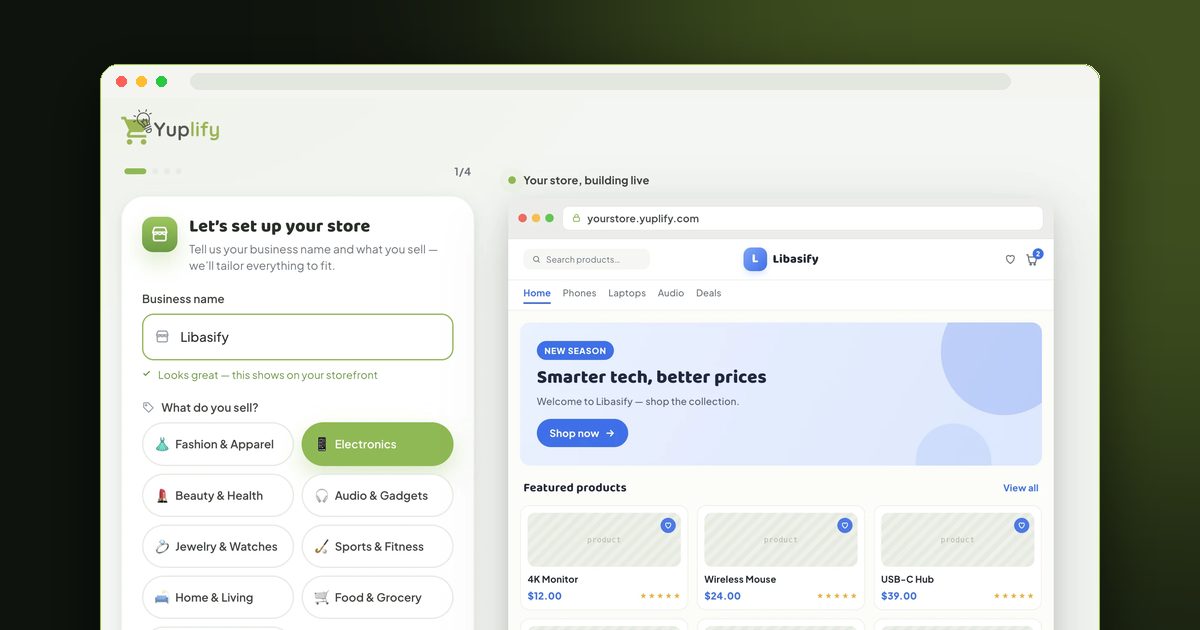
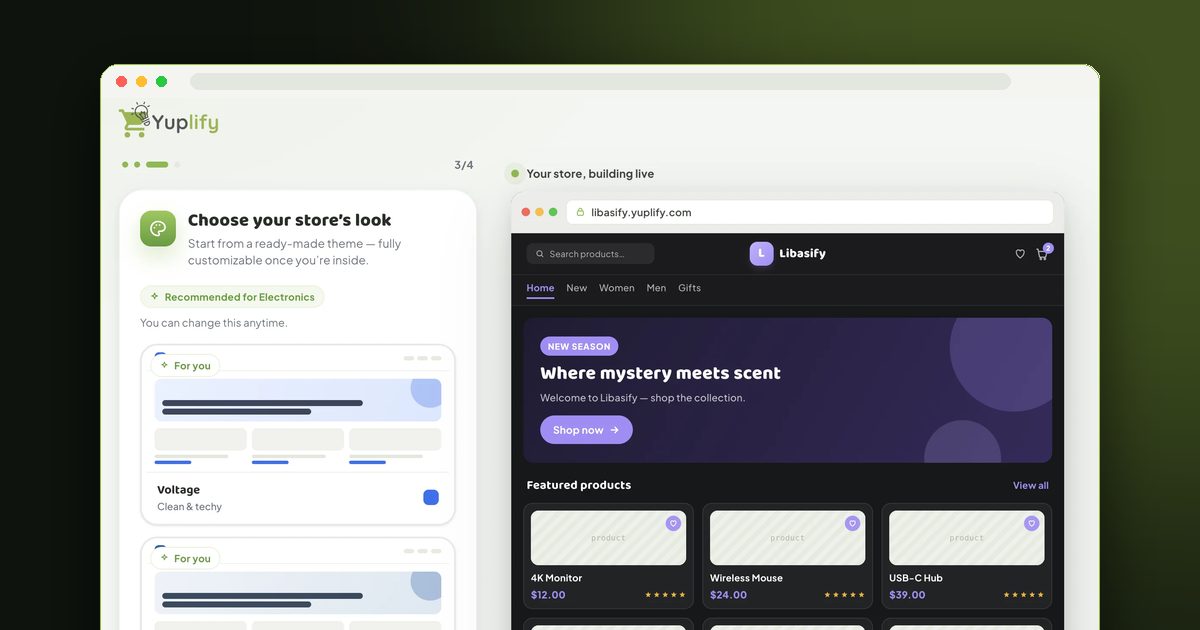
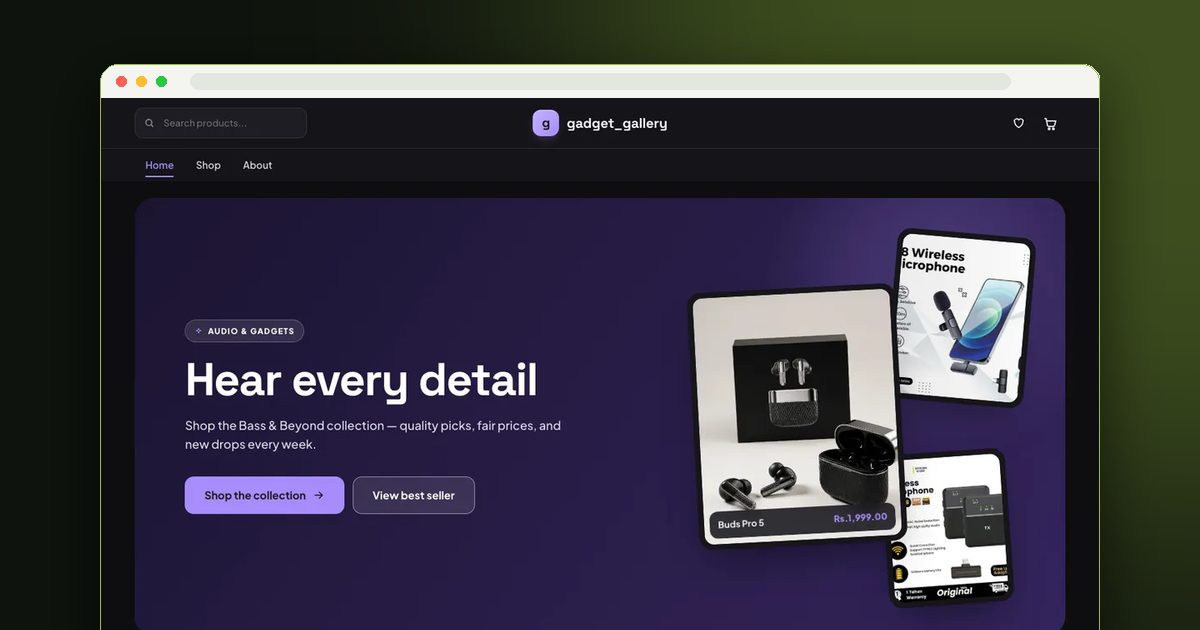
You answer a few questions — what you sell, your brand vibe, your main categories — and the builder assembles a homepage, navigation, collection pages, and a product page template. The output is rarely perfect, but it is a real starting point instead of an empty canvas. You then adjust sections, swap images, and tune colors. Think of it as a designer handing you a first draft in 30 seconds rather than three days.
2. Writing Product Descriptions and SEO Copy
This is where AI earns its keep for most store owners. Give it a product name, a few specs, and a target customer, and it returns a description, bullet points, a meta title, and a meta description. For a catalog of 50 or 200 products, that is the difference between launching this week and launching next month. You still need to edit for accuracy and voice — AI copy tends to sound the same across every store — but editing is faster than writing from scratch. For the fundamentals of copy that converts, see how to write product descriptions that actually sell.
3. Building and Cleaning Your Catalog
Newer tools can take a messy spreadsheet, a supplier feed, or even a set of photos and turn them into structured products: titles, variants, tags, categories, and pricing. AI is good at the tedious normalisation work — fixing inconsistent capitalisation, grouping variants, suggesting categories — that store owners usually put off. It is less reliable on pricing and inventory, which you should always set deliberately.
4. Merchandising and Personalization
Once you have traffic, AI features shift from setup to optimisation: recommended products, 'customers also bought' blocks, search that understands synonyms, and automatic reordering of collection pages based on what sells. These features used to require an enterprise budget. In 2026 they increasingly ship inside mainstream builders, though the quality depends on how much order data your store has generated.
5. Support and Operations
AI chat assistants can answer 'where is my order', 'what is your return policy', and basic product questions using your store content, escalating to a human when they are unsure. On the operations side, AI can draft restock alerts, summarise the week's sales, and flag unusual refund activity. This is helpful, but it is only as good as the policies and data you give it.
Where AI Still Falls Short
AI builders are weak in a few predictable places:
AI Builder vs Traditional No-Code Builder
The line is blurring. Most 'AI builders' are no-code builders with AI features layered in, and most no-code builders are adding those features. The practical question is not 'AI or no-code' but 'how much of the boring setup does this tool automate, and can I still control the result?' A builder that generates a store you cannot easily edit is worse than a blank template. For a wider view of the no-code approach, read no-code vs custom development.
How to Evaluate an AI E-Commerce Website Builder
Before you commit, check:
Is There a Free AI E-Commerce Website Builder?
This is the most common follow-up question, and the honest answer is: partly. There is no mainstream builder in 2026 that gives you unlimited AI generation on a free plan. What exists falls into three groups.
If what you actually want is a live store rather than a generated one, that third path is worth taking seriously. A free general-purpose AI assistant will write product descriptions at least as well as a builder's built-in generator, and you can use it alongside any platform to close the gap. Paying for a plan *because* it bundles AI copywriting is often paying twice for something you can already do free.
What to Watch For in Free AI Plans
If a free plan is the reason you are choosing a builder, read the AI terms specifically:
Where Yuplify Fits
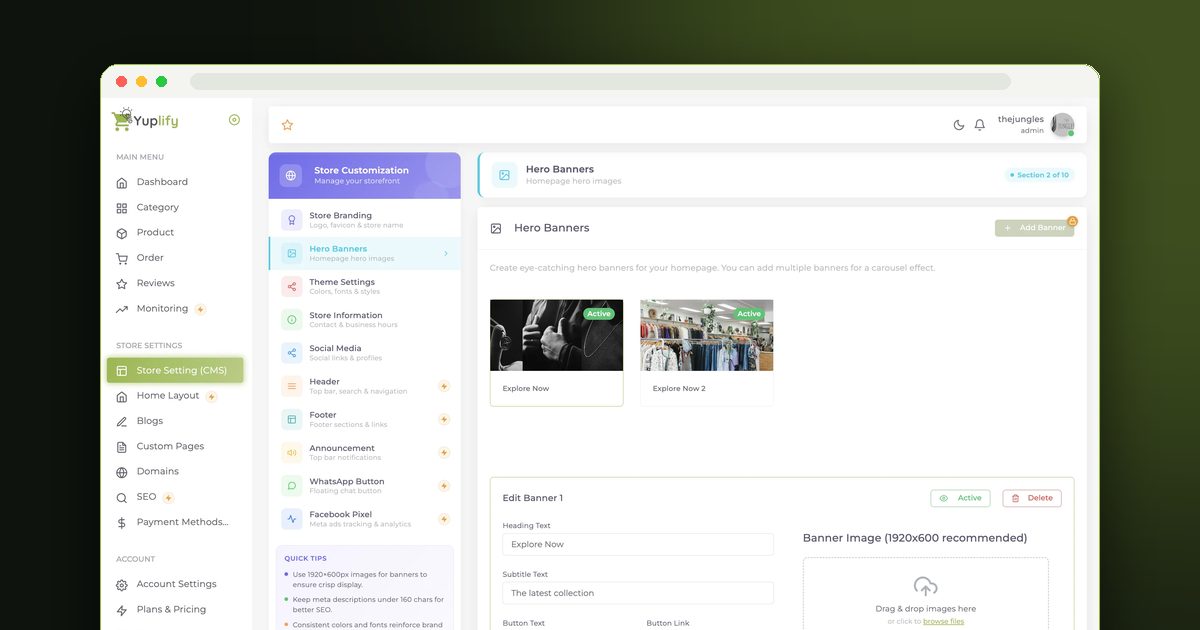
Yuplify is a no-code e-commerce website builder for small business owners, with a free plan that includes a real store — working checkout, up to 30 products, a free subdomain and SSL — with no cut taken from your sales. The focus today is on getting a non-technical owner to a live, professional store quickly by hand.
For a first store of 20 or 50 products, a well-designed manual flow plus a free general-purpose AI tool for the copy gets you to the same place an AI-generated storefront would, at no cost either way. Start on the Yuplify eCommerce website builder page, or see what we built specifically for small business owners.
More E-Commerce Website Builder Guides
Each guide in this series answers one question. Pick the one that matches where you are:
The Bottom Line
An AI e-commerce website builder in 2026 is a strong assistant and a poor autopilot. Use it to skip the blank page — first-draft layout, first-draft copy, catalog cleanup — and spend the time you save on the parts that actually differentiate your store: product selection, brand voice, photography, and customer experience. The tools are getting better fast, but the business is still yours to run.

Abu Bakar Memon
Founder & CEO
Abu Bakar Memon founded Yuplify in Karachi in 2023 — the free eCommerce website builder for small businesses in Pakistan. He writes about starting and growing an online store — pricing, cash on delivery, couriers and getting the first orders — from building the platform Pakistani sellers use every day.
Ready to Start Your E-Commerce Journey?
Create your online store in minutes with Yuplify. No coding required.
Get Started Free